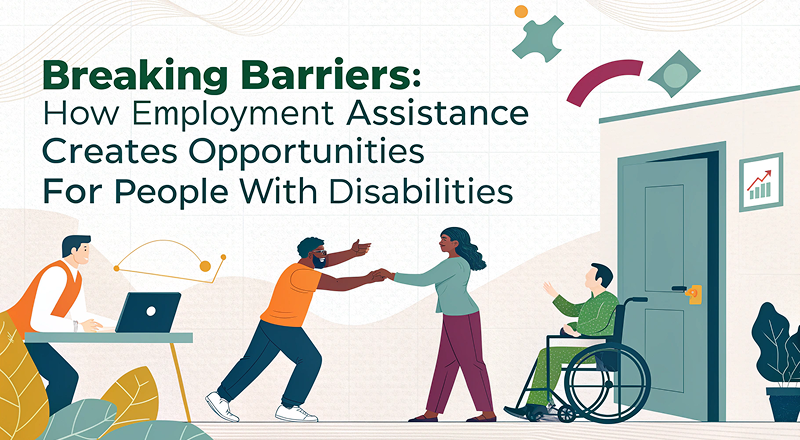
Employment provides individuals with disabilities the opportunity to thrive, contribute to society, and gain independence. However, for many, accessing suitable work can be challenging due to societal barriers, lack of appropriate training, or difficulty navigating complex job markets. That’s where Employment Assistance programs come into play—helping individuals break down those barriers and unlock new opportunities for growth and success. This support, often provided through NDIS-funded programs, is designed to provide both training and placement support to ensure that participants can access and maintain meaningful employment.
The Importance of Employment Assistance for People with Disabilities
Employment plays a crucial role in promoting social inclusion and fostering self-sufficiency for individuals with disabilities. Beyond the financial benefits, work offers opportunities for individuals to contribute to society, build skills, and connect with others. However, many face obstacles that prevent them from accessing traditional employment. These include societal misconceptions about disability, lack of inclusive work environments, and limited access to training and development opportunities. This is why Employment Assistance programs are essential—they level the playing field by providing tailored support to individuals, guiding them through the process of securing and maintaining employment.
Key Components of Employment Assistance Programs
One of the first steps in employment assistance is skills development. This involves helping individuals build the foundational skills needed for the workforce, such as communication, problem-solving, and teamwork. Specialized programs often offer training that addresses both technical skills related to specific industries (e.g., hospitality, retail, administration) and soft skills that can help individuals navigate workplace dynamics. Whether through individual coaching or group workshops, Employment Assistance ensures that participants have the skills necessary to excel in their chosen career paths.
Another critical component of employment assistance is job placement. NDIS Employment Assistance programs work closely with employers to find suitable roles for participants. These roles may be in a range of industries, from entry-level positions to more specialized work, depending on the individual’s skills and interests. Employment coordinators collaborate with employers to ensure that positions are adapted to meet the specific needs of the individual, such as offering flexible working hours, modifying tasks, or providing assistive technologies.
Ongoing Support for Success in the Workplace
Once a participant secures a job, ongoing support in the workplace is essential to ensure long-term success. This may include regular check-ins with the employee and employer to address any challenges that arise. For instance, if the individual encounters difficulties with tasks, supervisors or job coaches may provide extra training or offer alternative solutions. Workplace mentors or job coaches may also assist by providing guidance and encouragement, helping the employee feel confident in their role.
Support workers are also instrumental in ensuring that the workplace is inclusive and accessible. They help identify potential barriers in the workplace and work with employers to make necessary adjustments. This may involve providing assistive technologies (e.g., screen readers, speech-to-text software) or modifying the work environment to accommodate mobility aids. These adjustments ensure that individuals with disabilities have an equal opportunity to succeed and thrive in their roles.
Empowerment Through Employment: The Broader Impact
The impact of employment goes beyond individual success—it fosters community integration and social inclusion. When people with disabilities are employed, they contribute to the workforce, share their skills, and participate in the broader community. Employment provides not just financial independence, but also opportunities for personal growth, increased self-esteem, and an enhanced sense of belonging.
Moreover, as more individuals with disabilities enter the workforce, they challenge and shift societal perceptions of disability. They demonstrate that people with disabilities are capable, hardworking, and valuable contributors to society. This cultural shift plays a significant role in breaking down stigmas and creating more inclusive communities. By supporting individuals with disabilities in achieving their career goals, employment assistance not only transforms lives but also creates a ripple effect that positively impacts families, workplaces, and society as a whole.
Success Stories: Real-World Examples
To illustrate the powerful impact of employment assistance, consider the story of Alex, a young man with autism who faced significant challenges in securing a job. Through the NDIS Employment Assistance program, Alex received training in communication skills, resume building, and interview preparation. He was then matched with a local retailer who offered him a flexible position, and with the ongoing support of a job coach, Alex was able to learn new tasks and build confidence in his abilities. Today, Alex is not only employed but has developed greater independence and self-worth, and he continues to grow both personally and professionally.
Similarly, Sarah, a woman with physical disabilities, was able to pursue her dream of working in administration through the NDIS Employment Assistance program. The program supported her by providing assistive technologies and adjusting the workspace to meet her needs. With these accommodations, Sarah was able to thrive in her role, and she now serves as a mentor for others, proving that with the right support, individuals with disabilities can achieve their career goals.
Conclusion: Empowering Individuals Through Employment Assistance
Employment Assistance for individuals with disabilities is more than just about finding a job—it’s about creating lasting opportunities for personal growth, financial independence, and social inclusion. By providing tailored training, job placement support, and ongoing workplace assistance, these programs ensure that individuals are not only prepared for employment but can sustain their roles in the long term. The benefits of employment go beyond the paycheck—they impact an individual’s quality of life, confidence, and sense of belonging within their community. Through Employment Assistance, we are not just helping individuals with disabilities find jobs—we are helping them build brighter, more fulfilling futures.